14 January 2013

A Look into Fall 2012

Summer slid quietly into Fall and we barely noticed the changes until late October. The gardens at Heart's Ease Cottage were still lush and beautiful well into November. Our "May Rose", (dubbed so since it blooms in profusion in May and then to a lesser degree again in the Fall), surprised us with a second full flush of blooms in September. It was actually still blooming in December...
This Fall was a very busy time for us. Da works in the elections process and this year was a "Presidential", so craziness began in late August and didn't end until early December. Even with the long hours of work and the endless demands of a Presidential election, we managed to get a Fall garden planted and took some day trips, (usually on Shabbat, since that was the only day Da was guaranteed not to be working).

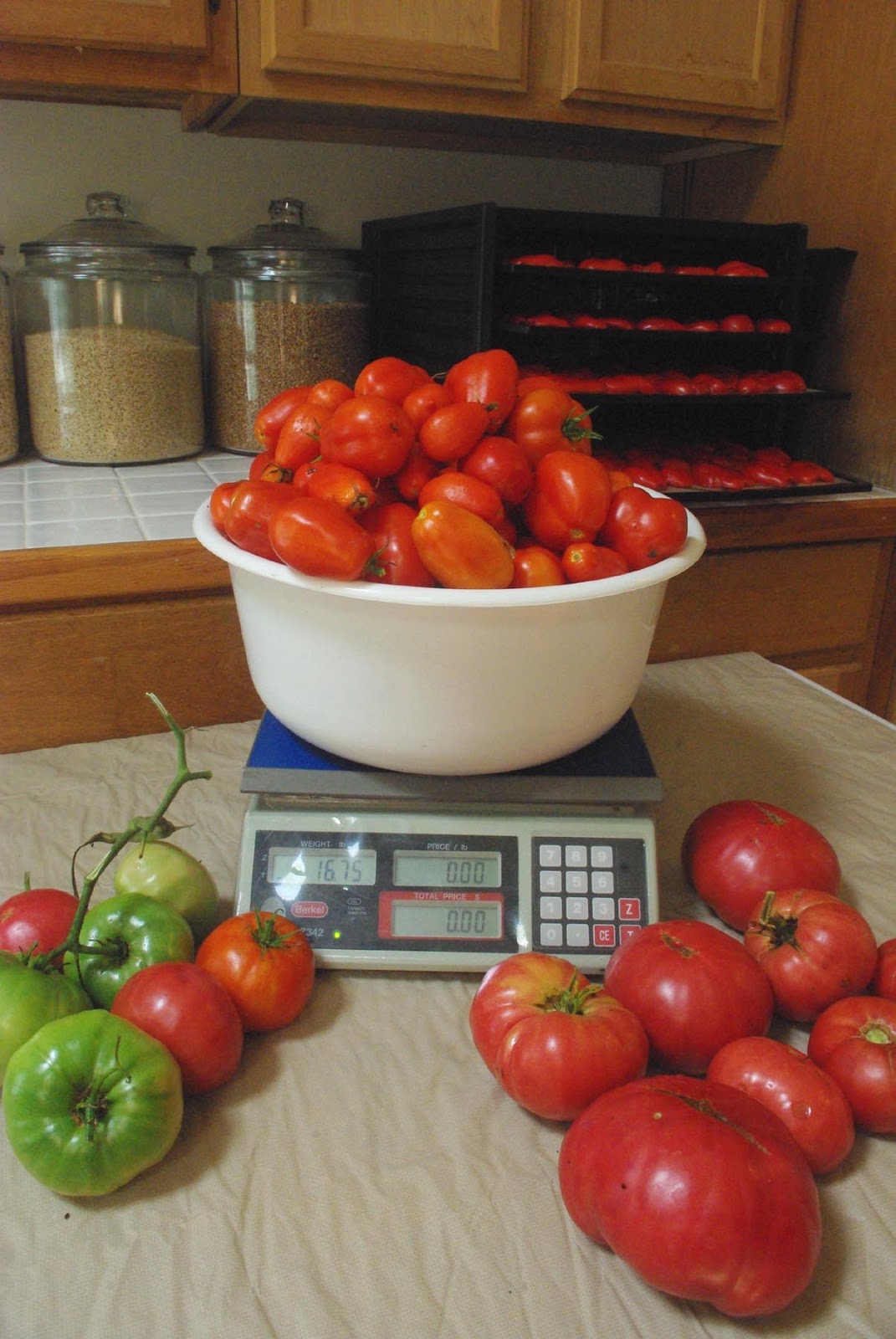
 I spent most of the Fall preserving the harvest. This year we have been eating vegan/raw,  so "preserving the harvest" was done a little differently. Usually I can the tomatoes, beans and other summer veggies, but this year the only water bath canning I did was Bread and Butter pickles. Instead of canning, most of the produce was dehydrated at low temperatures, (105 degrees), to preserve the enzymes and keep it as close to raw as possible. Dehydrating the produce from our garden also makes it possible to package it for long term storage. In the coming days I hope to devote one day a week to blogging about Pantry Keeping. I am very excited to share the concept with you and give some tips on managing your food supplies for use today and to put-by for the future.

 Our first hard frost usually comes around November 15. This gives us a nice long season to enjoy the last of our Summer vegetables. Here in North Carolina the Summers are very hot and we get little or no rain. Tomatoes, eggplant, okra and other heat loving vegetable do fine, but peppers are another story... peppers need to be planted in April/May in order to have their roots systems well developed before the heat sets in, but they will languish in the heat and drop their bloom all summer with nary a pepper on the bush. Once the heat of Summer has passed and the rains start again, the peppers that did nothing all Summer, will be full of blooms and the bushes will be enormous! The peppers don't seem to mind the short days of Fall and will produce more than we can eat or share. Before the frost took the plants the last week of November the peppers had grown to 6 feet and were loaded with pepper of all colors and sizes...it was quite a sight! This year I actually  got the last of the peppers picked before the frost got them, so I had  peppers lining every surface in my kitchen. Since there was no room in the fridge for all them, I decided the best thing to do was dehydrate them. It is really amazing how what covered 20 linear feet of counter, could 24 hours later fit in a quart sized canning jar!

A still life of our late November peppers


The last of the tomatoes and okra and a glimpse of the Bread and Butter pickles.


Beds of Detroit beets and Cos Romaine planted in September will be ready for use in November.


The last of the Spring lettuce was allowed to go to seed so that we can save the seed for next year.


A project in the bathroom that was begun in March has steadily progressed over the Summer and into the Fall. I think we will finally be able to call it a done deed by the end of March 2013! Things always take longer than you think they will, and this year has been full of projects, so it is a good thing we can manage with one bathroom out of service!

One of the day trips that we squeezed in this Fall was to Hanging Rock Park. There are actually several falls, not just one. This one was my favorite, I loved the way the rocks frame area around the falls.

We spent a Sabbath afternoon at Hanging Rock, hiking from one falls to the next, stopping for a picnic and to spend some time reading aloud from a book we were reading together.

Oh and  just one more photo... Tagg says "It's late Mom and I need to go to bed", so I guess I should take a hint and say goodnight. Until next time!

10 January 2013

How to make an Herbal Tincture Part 1

We have recently survived a 4 week bout with sickness. Both my husband and I were struck down and unable to eat, drink much, or get up for days. I don't know what we had exactly, a virus? No one else had what we did... Hm-m-m... we don't know for sure, but what we do know is that we never want to be sick like that again!

Unfortunately, I was not prepared for cold and flu season like I should have been. I am very late getting my tinctures made so we were ill equipped to fight off illness or to treat the symptoms once we were sick. My old standby essential oil blend helped of course, but we came down so fast it really didn't get a chance to work its magic before we were out for the count.

My grandmother's old saying, "It is a little late to close the barn door after the animals have gotten out..." rang in my ears as I kicked myself for not having the tinctures done in September. I vowed to get them done ASAP, but had to wait until I was well enough to drive so I could go to the liquor store for grain alcohol. No...I wasn't going to drown my sorrows in PJ's, I needed the grain alcohol for making tinctures.

There are several tinctures that I like to have on hand for staving off sickness in the fall and winter.  Both my youngest son and I have issues with bronchial asthma, so we lean heavily on Yerba Santa for its expectorant, bronchial dilator and antimicrobial, properties. It is the first thing I reach for when one of the family is dealing with respiratory problems. In order to boost immune response when coming down with something, I look to Echinacea. Olive leaf is indispensable as an anti-bacterial, anti-viral, anti-fungal, and  immune-booster. In the future I hope to highlight each of these herbs and detail their benefits, but today I want to show you how simple and economical it is to make your own tinctures.


To make your own medicinal herbal tinctures you will need the best quality herbs you can obtain. I order most of mine from Mountain Rose Herbs or The Bulk Herb Store. Both have high quality herbs, lots of information, and tutorials. You will also need at least 90 proof clear alcohol, like vodka. I use 190 proof grain alcohol for the extraction process and then add water to dilute when I am ready to bottle the tincture.***WARNING! Grain alcohol and Isoprophyl alcohol are not the same!!! Grain alcohol is an alcoholic beverage and is purchased where you find other alcoholic beverages, Isoprophyl alcohol or wood alcohol, is a disinfectant and is poisonous. Drinking Isoprophyl alcohol can lead to blindness and possible death.***  There are a few kitchen items that you will also need: a wide mouth pint canning jar, a two piece lid and band or a plastic screw top lid that fits a wide mouth jar, a plastic funnel, a bamboo chop stick or skewer and a pen, some adhesive backed labels and transparent tape.


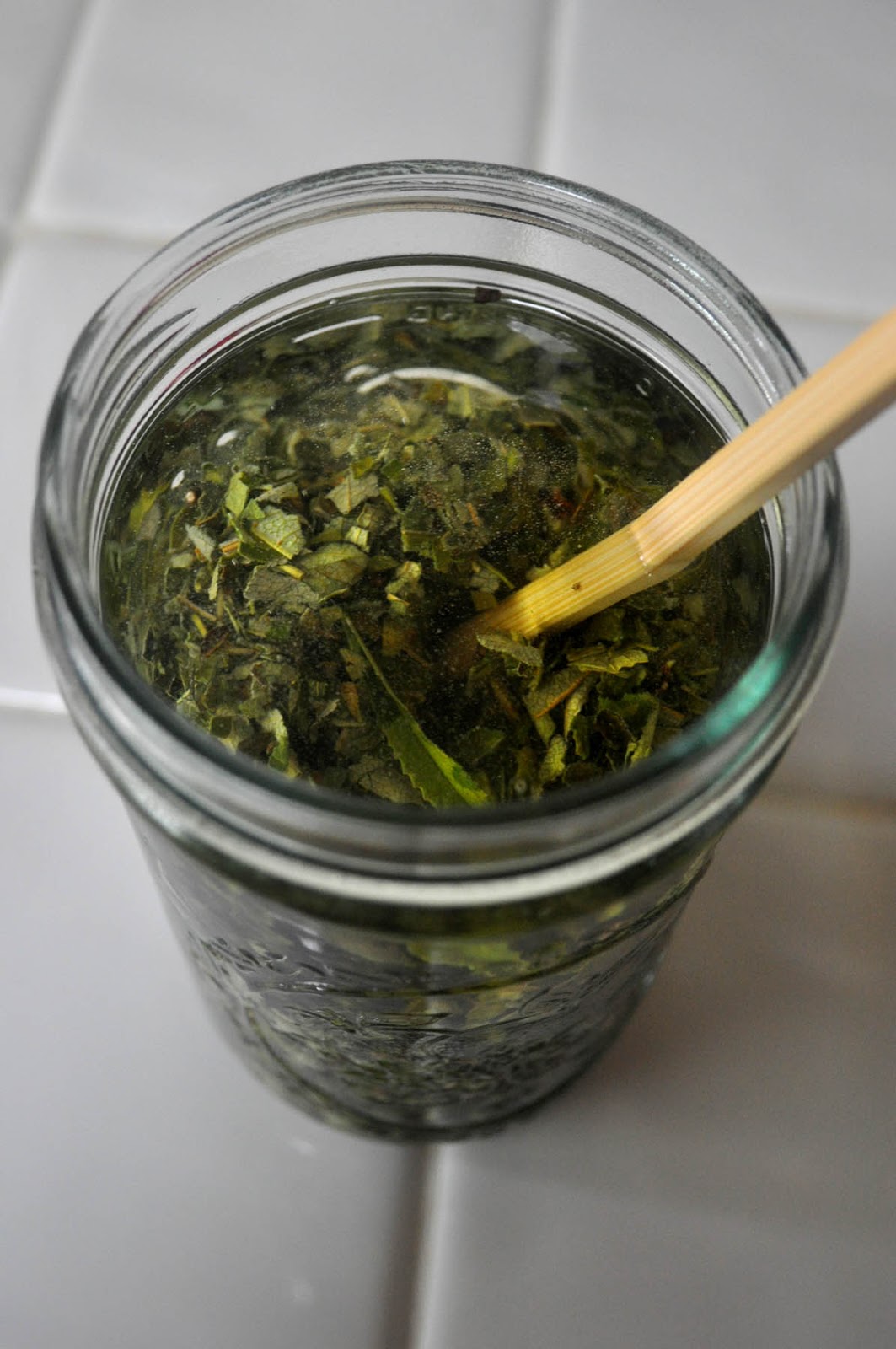
Fill the jar 1/2 way with the herb of choice. If it is a light weight, fluffy herb, then press down slightly and fill again to the halfway mark. Do not pack tightly, since the herbs will soak up the moisture and swell in time.


 Pour the 190 proof grain alcohol over the herbs and fill the jar to where the screw threads on the jar begin, about 3/4 inch from the rim of the jar. You may need to top off the alcohol during the first day or so, as air bubbles dissipate and the herbs soak up the alcohol. It is necessary to keep the plant material covered with alcohol or it could spoil. Stir with the bamboo stick to dislodge air bubbles and uniformly wet the herbs, taking care to break up any clumps of herbs. Top off if the level of alcohol drops below the screw threads.


Write out on a label the name of the herb, the day you started it and the day the tincture will be ready,(the ready date is 6 weeks after the start date). Also note what kind of solvent was used for the tincture. Vodka is only 90 proof and has already been diluted, grain alcohol is 190 proof and will need to be diluted before use, so noting what alcohol you used will help you avoid dilution mishaps later.


Screw the lid on tightly, invert once or twice and then wipe the jar with a clean, dry towel. Apply the label and then cover the label with tape if desired. The tape will prevent ink from running if the jar gets wet during the tincture process. I have found that the two piece lids are water tight, but the plastic lids can sometimes leak around the edges, so I just cover the label to be safe. It is very frustrating to have ink run and the identity of a tincture be in question. If you are doing more than one kind of tincture at a time it might be difficult to tell one from the other if the labels are ruined.


Finally place the jars out of direct sunlight and invert the jars daily to move the herbs around in the alcohol. It is a good idea to put them somewhere that they will be seen, to remind you that they need daily attention . The jars should be inverted at least once a day everyday for a week, at this point they can be put in a  cabinet out of the light and out the way, but need to be inverted several times a week for the remaining 5 weeks.

Now for the savings...
A one liter bottle of grain alcohol is about $18.00, for one wide mouth pint jar half filled with herbs, you will use 8-10 oz. of alcohol, so we will say the cost of the alcohol for one tincture is $5.50. The herb prices will vary by herb, so I will just give you the cost of the Yerba Santa. I purchased 8 oz. of dried Yerba Santa for $7.50. Of the 8 oz. I bought, I used 4 oz. for a pint of tincture, the cost of 4 oz. of Yerba Santa was $3.75.  The total amount of tincture that is rendered from the herb/alcohol mix varies depending on how well the tincture is squeezed from the plant matter when straining. I will say for 4oz. of herb and 10 oz. of alcohol, 8 oz. of tincture is produced and 4 oz. of plant matter goes in the compost. That makes the total cost $9.25 for 8 oz. of tincture solution. If the tincture is made with 190 proof grain alcohol then the end product will be diluted 1 to 1 with water, which will make the cost of 8 oz. of tincture $4.63. The finished tincture needs to be kept in a dark place. I would keep the bulk of the tincture in a canning jar in a cool dark cabinet. For use I would purchase some 1 oz. amber dropper bottles and keep one oz. ready for use in the medicine cabinet. Mountain Rose Herbs sells individual amber dropper lid bottles for $1.15. The cost of home made tincture is 59 cents per oz. plus $1.15 for each bottle used. Which makes the cost per bottle $1.74. This cost does not reflect shipping costs, since that will vary with the size of the order. For comparison I looked up the price of a 1 oz. bottle of Yerba Santa tincture on several sites, the average cost was about $12.00 for a 1 oz. bottle, plus shipping, (average of $5.95). So by making your own tincture you have saved yourself $11.41 per oz. (plus the cost of 1 bottle), times 8 oz.of tincture plus another $5.00 or so in shipping. Wow...

One benefit that can't be factored out in dollars and cents is the satisfaction that you get from being involved in the whole process of keeping your family well. The experience that you gain and the confidence that you have in the strength and purity of the product you are giving to you family, can far outweigh the cost benefits of making your own remedies. If you are concerned about what to do with 8 oz. of tincture, don't worry, dried herbs only have a shelf life of about a year before they lose some of their potency, but herb essence preserved in a tincture of grain alcohol will last for years. If you find you have more than you need, I am sure that there are family and friends that can share the wealth! If the amount produced is really a concern, you can always cut the recipe in half.

Part Two of this post will be published when the rest of the supplies I ordered come in. Until then, why don't you give making tinctures a try! Let me know how it goes...I would love to hear from you!

**As a side note, In some states sale of 190 proof grain alcohol is illegal. Here in North Carolina it is was made illegal a few years ago, so now I drive to South Carolina, (I am very near the border so it is no biggie for me). 90 proof vodka will do the job, if you can't obtain 190 proof grain alcohol.**


Blog Hops this post is linked to:
Wildcrafting Wednesday #77
Frugally Days Sustainable Ways #67
Wildcrafting Wednesday #14 
Home Acre Blog Hop #13
Farm Girl Friday Blog Hop #103
Busy Bee'a Blog Hop #11
Farm Girl Blog Fest#28
Strangers and Pilgrims Herbal Linkup

This blog entry is intended to be available only to persons above the age of 18, or the above age of majority in your country. By accessing the content of the blog, by clicking on any related or third party links, you certify that you are over 18 years of age, or that you have attained the age of majority.
Content available from this blog or from linked related or third party sites, is intended to be available only to the residents of those countries that allow such health related guiding content to be freely circulated.
The information contained in this website is presented solely for general informational purposes so that you may learn more about the subject. NOTHING CONTAINED IN THE BLOG IS INTENDED TO CONSTITUTE, NOR SHOULD IT BE CONSIDERED, MEDICAL ADVICE OR TO SERVE AS A SUBSTITUTE FOR THE ADVICE OF A PHYSICIAN OR OTHER QUALIFIED HEALTH CARE PROVIDER. WE MAKE NO ASSURANCES OF THE INFORMATION BEING FIT OR SUITED TO YOUR MEDICAL NEEDS, AND DISCLAIM ANY IMPLICATIONS OF ANY CONTENT OR ADVERTISEMENT ON MY BLOG BEING FIT AS PER THE PRACTICE OF MEDICINE. NOTHING CONTAINED IN THE BLOG IS INTENDED TO GIVE RISE TO, NOR SHOULD IT BE CONSIDERED AS GIVING RISE TO, A DOCTOR PATIENT RELATIONSHIP.


03 January 2013

A Look Back at Summer 2012

   Summer began in April this year...  Spring began in late January... It was an odd weather year. It was very warm very early, which caused all the fruits to bloom too early. The weather was warm all the way up to a few days after the last frost date, then we had a cold snap. Most everything fared well, but the blueberries suffered. Any of the blossoms that were open when the cold snap came were burned and no fruit formed behind those blossoms. We lost about 1/4 of our blueberry crop, but even so we harvested 35 lbs. of blueberries. We ate blueberries by the handfuls, made smoothies, froze them for later and shared them, so we really didn't suffer much from the lost production, but I hate that we had less to share than we normally do.

   One of my goals for the summer was to renovate my herb garden. During our year in Costa Rica the herb garden went to weeds, an obnoxious weed that invades everything. I had to dig out my surviving herbs, sift all of the soil to eliminate the network of fleshy roots that went a foot deep, and then amend and replant the herb bed. I will make a blog post that shows the process, but for now I am just posting some mid-summer photos of the herb garden, which you will find further down in the post.


Raw Jalapeno Poppers with Cashew "cheese"
   By this point Da and I have been eating vegan/raw for a couple of months. I spent a lot of time researching and developing recipes to convert some of our favorite recipes to a no cook version. I came up with several recipes that we have been very happy with, but I still haven't come up with a no cook pizza that I like. For the most part we have been eating simple meals, but for Shabbat and other special occasions, it is nice to have delicious and beautiful food to serve. I will be posting more about vegan food preps and recipes in the future and leave you with a photo of a finished product for now.

Trail view of the Cascades
   As part of our "take our health back" plan we have been walking and hiking as much as time will allow. We have traveled on many day trips around the North Carolina and a few over night trips a little further away. One trip was to the Cascades outside of Pembroke, Virginia. I lived in Blacksburg in my high school years, which is close by, so I used to go to the Cascades a couple of times a year. It is a beautiful place. Even more so since they repaired flood damage a couple of years ago and did a beautiful job of improving the trails and restoring the river trail. We met a couple at the top, near the falls and I took their photo, so in turn they took ours. It is rare that we have a photo with the both of us in it, so that was a real treat!


   Due to the fact that we are eating as much raw food as we can manage, we didn't do much canning this year. But we did do some canning of things that we need to keep on hand for our emergency pantry and some things like bread and butter pickles, pickled beets and salsa that we just like to have on hand. I have plans for a once a week blog entry on Pantry Keeping. I will discuss maintaining a regular working pantry, but also I want to talk about a 3 month and Long Term Storage (LTS) pantry. I won't call myself a "Prepper", since I am not planning for any particular scenario, but I will say that I don't like being caught unprepared to take care of my family when life happens.

   Finally, I just wanted to share some of the beauty that surrounds us here at Heart's Ease Cottage. We have tried to encourage both flora and fauna to live here in abundance. We live with the windows and doors open when we have to be inside and for much of our life during good weather, we are living outside. So having Flowers, birds, butterflies, and bees to add color to our life is a real pleasure.


 This little bunny fountain is planted with seasonal flowers to cheer a spot near the front door. Impatiens always makes me think about Costa Rica, where they grow wild. My outdoor laundry sink had them growing out of the cement, it made me smile every time I did the laundry.


 Sweet juicy blueberries and strawberries were on the breakfast menu daily. With organic berries costing $6 a pint we were very grateful for the abundance of berries we have growing in our garden!

Zucchini and cucumbers must be planted on the last frost date here in North Carolina, in order to bear fruit before the insects that plague them emerge and ruin them. There are few organic solutions to cucumber beetles and zucchini vine borers, so knowing their life cycles and timing planting dates to harvest before the insect adults emerge is the best solution that I have found.

This Russian Red Mustard was planted in the fall and used all winter and spring as greens. A few plants were left to bolt so that we can collect the seed. Seed collection is an integral part of self sufficiency, but our limited space doesn't permit us to collect seed for everything we grow.

We have an herb garden outside our kitchen door that is planted with a variety of herbs that I can run out and snip and pinch while preparing meals.

Basil and zinnias mingle in the main garden. We reserve a 20 foot bed in the vegetable garden for bulk plantings of larger herbs like basil, dill, tarragon, oregano, which can occupy a lot of space.

Encouraging bees to visit our garden is only one reason that we plant flowers in the vegetable garden. The paint box colors of zinnias and nasturtiums also add cheer and beauty to the garden.

We grow a variety of tomatoes, some for fresh eating, some for preserving. This basket is filled with heirloom slicing tomatoes like Cherokee Black, Mortgage Lifters and German Pink and a tasty little currant tomato that packs a lot of flavor into its diminutive size.

Wherever we can pack them in, we plant flowers and bushes that draw butterflies. By mid-summer the Buddleia bushes and Lantana are covered with 15 varieties of butterflies and skippers. This Tiger Swallowtail is a frequent visitor to the Dark Night Buddleia that is planted below our deck.


This tiny little female hummingbird is smaller than a D-ring on my clothes line. She uses the clothesline as a perch to rest on between visits to the nectar feeder on our front porch.

The Graham Thomas rose, better known around here as Patrick's Rose.


The Graham Thomas bloomed early this year, as did most of the perennial flowers in our garden. Its citrus/rose aroma blended deliciously with the night scented jasmine that grows near by.

Foxgloves are one of my favorite early summer flowers. They grow in great spires in front of the rosemary in May and are completely gone by the time the Rudbekia blooms in July.

Da took me for a visit to my hometown, Blacksburg, Virginia. While we were there we made a day trip to The Cascades in nearby Pembroke, Virginia. It was a great way to end the summer!


02 January 2013

Thinking Back on 2012

   Well, it has been way too long since I posted and I have no excuse except "life happens".... The year 2012 was a year of transition for my family, Heart's Ease Cottage, and me personally. I struggled with changes and chaffed at some of the new realities, I began eating a vegan /raw diet, lost 32 lbs., (only 15 of which I intended to lose...), and I have worked at becoming physically fit. I am learning to let go, I have searched for purpose, and reflected on my beliefs. I am exhausted... but by the end of the year I am able to say that I have survived this stage of the process and can honestly admit that 2012 was a good year. Just not one I want to repeat any time soon!
   One really good thing that happened in 2012 was I took my health back. I have struggled with Fibromyalgia for many years and it almost got the best of me this past Spring. In April I decided to change to a vegan diet, with the focus on consuming as much nutrient rich food as possible. My husband and I have juiced 20 lbs. of carrots and 10 pounds of leafy greens and other veggies every week since mid April. We are taking barley green and eating only fruit until lunch. The rest of the day we eat small meals of fruits and veggies, smoothies and vegetable juice. As the weather has gotten cooler, I have added some cooked food in the evening, to keep the inner fires burning. To this we have added more walking and hiking, on the average between 15-20 miles a week. We have spent a lot of time together, walking the various green ways as well as trails in state and national parks around North Carolina. I think the time together has helped about as much as the diet changes and exercise!  In the end our efforts have rendered good results. My pain is greatly reduced, I have lost weight, have lots of energy and overall I feel great. The hardest things to overcome were the fatigue and depression. The fatigue diminished early on, but the depression lingered and I struggled with it to the point of despair, but I think I am finally making some headway with that as well, (dealing with depression naturally is a slow process, but if given time is very effective). All in all I am happy with the results and plan to continue in 2013 with the vegan diet and spend lots of time outside with my husband working in the gardens, walking and hiking.

   Life around Heart's Ease Cottage has seen many changes as well. Our homestead has been in the process of changing to suit our present needs. Being empty nester's with less mouths to feed and a  vegan diet, our food storage needs have shifted. There is a much greater demand for fresh food from the garden and no need for livestock for meat and milk, or for chickens for poultry and eggs. So the barns are being converted for other functions, and we are increasing our garden square footage. My husband has spent the year dressing up and refining our present garden space and we have successfully kept the garden producing through 4 seasons. All around the homestead 2012 was spent cleaning, clearing, organizing, re-purposing, renovating and updating. Some improvements we planned for our house in 1989,  that were way laid by Hurricane Hugo, are now almost 24 years later, coming to pass. My dear husband worked tirelessly this past year to earn the funds for a bathroom remodel and to make our defunct coal burning fireplace into a functional location for a 1890's wood burning stove. Both projects should be done early this year. I will make a separate blog entry for each of those projects in coming days.
   One of my hopes for this year is to make blogging a priority. I have been photographing many homesteading projects as they were in process; with the intention of writing tutorials, so I have a lot of blog posts in the que to share with you in the near future.
      As a final note, I will be posting photos of each season over the next few blog entries as a photo retrospective of what has been going on in 2012 at Heart's Ease Cottage. For today here is Spring 2012!

                         Our Azaleas gave us quite a show this year!

         We planted these azaleas as 1 gallon pots 20 years ago...

Our little cottage and our 1957 camper are in the background.

One of my favorite Spring ground covers also has medicinal uses, Vinca Minor, commonly known as Periwinkle, enhances memory when the plant matter is infused as a tea. It also helps with diabetes, is used in cough medicine and when applied to a cut will stop bleeding. In future posts I will be talking about the medicinal properties of common plants and yard weeds.

Fava Beans and Jersey Wakefield cabbages grow together in a spring garden bed. Fava beans are winter hardy and fix nitrogen on their root so we use their mature beans to make tasty Egyptian falafel and the plants as a green manure and winter ground cover.

Here is a close up of the maturing Fava beans. When the pods are ready the beans are 6-8 inches long and thicker around than your thumb. The bean seeds are larger than a Lima bean and can be used fresh or allowed to dry in the pod for storage.

A maturing Jersey Wakefield cabbage. Their conical heads resist splitting and weigh in at 5-6 pounds at maturity. We plant them in August for an October harvest and again in November for an early spring harvest. This cabbage is very cold tolerant, it may grow slower during the deepest cold, but will head up rapidly as  the weather warms up.

These are Detroit Red beets. We grow them year round for their tops and tubers. They tolerate heat without bolting and add lots of good nutrients to our veggie juice, in salads and of course, they make wonderful pickled beets when harvested about the size of a ping pong or golf ball and pickled with cider vinegar, cloves, bay leaf, mustard seed, and allspice.

We start our vegetables, herbs and flowers inside under lights. One 6 foot tall by 4 foot long shelving unit with two banks of florescent shop lights per shelf will hold 6-8 seed flats at a time. We set the shelves up in the early fall and it is in full production until we set out the eggplants, peppers and tomatoes in late April/early May.

Black Seeded Simpson and Lolla Rossa lettuces are good choices for an early spring cutting lettuce. We also grow a mixed variety of "cut and come again" lettuces and salad greens, Cos Romaine and Butter Crunch head lettuce, as well as Bloomsdale Long Standing spinach, and green bunching onions as early spring fare. Later, we will plant Oakleaf lettuce when the weather starts to warm up, since it is more heat tolerant than others.

I hope you are all enjoying the joys of a new year! See you soon!
                                            Elle


26 May 2012

Shavuot

Today is the last day of  the counting of the Omer, and tomorrow is Shavuot. Shavuot is also call the Feast of Weeks. Being Karaite Jews, we do not adhere to the Talmudic (Oral/Rabbinic law) mandates to determine the day, but use the mandate of  the Torah only for observation of this feast. According to Leviticus 23:15-16, "The Counting of the Omer" would always be on the Saturday that falls during the week of  Unleavened Bread. Forty nine days are counted off and the 50th day, which is a Sunday, is a holy convocation, a day set apart to celebrate before God. No customary work is to be done...it is a day of rest.
During the time when the YHWH's Temple stood in Jerusalem, this was a day when the two loaves of leavened wheat bread were presented to Him as a Wave Offering by the Priest. This was a  first fruits offering for the wheat harvest, the day after this offering, the wheat harvest would commence. The day goes back much further than the temple though, Shavuot is the day that God gave the Ten Commandments to Moses on Sinai, 50 days after the exodus from Egypt.
For our family, the giving of Yahweh's instruction is a red letter day. It reminds us of how much He loves us, through His salvation, liberating us from the bondage of the oppressor, His instruction, the 10 commandments and their explanation to guide our way, and His provision for our need for food and shelter. We are so grateful and there is much cause to celebrate!


Baruch atah Adonai Eloheinu Melech Haolam shehechiyanu vekeyehmanu vehegianu lahzman hazeh. 

Blessed you are O Lord our God, King of the Universe who has let us live and sustained us and brought us to this time.

21 May 2012

Early Blackberries

  The brambles are full of ripening berries and I had my fruit bowl this morning topped with fresh blackberries still warm from the canes. Normally, the blackberries are coming in in mid to late June, just slightly before our blueberries are ripe. But this year, everything in the yard has been way too early... We originally planted 3 domesticated cultivars and a gone wild blackberry from a long gone home place on a friends property. Over the years all of the varieties that we bought died for various reason, the "thornless" blackberry just withered in the North Carolina summer heat, One was prone to fungus and I think the other went the way of some other unfortunate upstarts in the yard and was accidentally mulched by the lawn mower. But the gone wild blackberry from the old home place, has proven to be hardy and nigh on indestructible. They have multiplied so much over the years that we have run out of room for them. We have two 25 foot long rows of blackberries, trained to fencing When the new shoots come up now we dig them up and put them in one gallon recycled plant buckets. Occasionally we thin out older plants that have become less productive and replace them with ones we have waiting in buckets, but mostly we give the plants as gifts or sell them.
  The berries as you can see in the photo, when ripe are bigger than my thumb. One berry covers most of the palm of my hand... These berries are wonderfully sweet and juicy. It is important though to know when to pick them .If you pick them one day too early, instead of filling your mouth with sweet blackberry goodness, it will be bitter/sour and cause your face to pucker up involuntarily. No amount of ripening inside will take the bitter taste away either.  This particular berry makes up the majority of our black berry canes. We have them trained to livestock fencing so that we can assure good air circulation, (to combat fungus), keep the brambles under control and off the ground, and keep the canes from attacking unsuspecting gardeners as they as squatting to weed.


  The best way to know that the berry you are choosing to pick is ripe is to turn your hand palm up directly under the berry and then gently tickle it with your finger tips. If it is ripe, it will fall off into your hand. The other way is to ever so gently tug on the plump dark purple/black berry, if there is any resistance then the berry needs long on the cane. If it comes off quite easily then it is probably ripe.
  We freeze most of the berries we don't eat outright. I used to make blackberry jam for the kids, (the biggest kid being my husband who dearly loves to slather jams on hot home made bread), but these days we are not allowing much sugar in our diet, so all those jars of glistening jelly are too much of a temptation. Instead of making sugary jams and jellies, I make smoothies with frozen bananas, mango or peaches and blackberries. I freeze all the fruit and then just grab a couple of handfuls of whatever I want, add orange juice, pineapple juice, or unsweetened cranberry juice and blend into a frosty smoothie that is thick enough to hold a spoon upright in the glass. During the summer months we practically live on these... nothing is better after working in the garden than a spot of shade, a companion and a refreshing, oh so tasty, smoothie.
  In case you have never made a home made smoothie, I will give you the run down on what we do to make sure we are smoothie ready whenever the urge strikes. Purchase very ripe bananas, ones with lots of freckles, or do what we like to do, buy them in quantity green and let them ripen on the counter and then when ripe we do a mass packaging of bananas and fill a freezer shelf with them. We let them ripen until just shy of a banana bread banana..., (banana bread bananas being almost too soft to peel, more black than yellow).  They should have some give when gently pressed with fingers, with lots of freckles, but not be squishy. Peel the bananas and break each one into three pieces, ( do not freeze bananas in the peel...once you freeze them you won't be able to get the peel off), fill quart sized freezer ziplocs with as many peeled bananas as will fit and still allow you to close the bag. Gently push out as much air as possible without mashing bananas to slow the browning effects of oxidation.

**There is a better way to store the bananas, but it requires a Seal-a-Meal/Food Saver type vacuum sealer. I lucked out and found my never-been-out-of-the-box, Food Saver at Goodwill for $14,
but the regular price is around $100.00 at Walmart. The vacuum sealer is worth its weight in gold if you eat raw like we do. It allows you to prepare many vegetables and fruits ahead without having to worry about things going brown after they are cut. It saves a lot of time in food preps since you can do a lot of prepping at one time instead of every time you need to prepare a meal. There is also much less waste of produce due to spoilage. Bananas will last much longer prepped with a vacuum sealer as they don't get brown and bitter like they do if you try to keep bananas in a Ziploc for more than a week or so. **

The bananas are the base for most of our smoothies, since they are readily available, affordable, and add sweetness and a creamy consistency without the addition of  sweeteners or dairy.  I put one to one and a half frozen bananas per person, in the blender.To this we add a handful or two other fruits that we have frozen fruit and enough juice to thin it some and aid in blending. I like mine thick enough to eat with a spoon, but if you want a smoothie you can drink through a straw, then just add juice until you have the consistency you want. Some time this summer I will try to do a blog post with some of our favorite smoothie recipes. I also would love to hear about your favorites, if you would like to share, leave a comment.


Related Posts Plugin for WordPress, Blogger...